
Updated October 2026 · 5-minute read · Skip Hire ZA, Cape Town
A common and entirely reasonable question from Cape Town homeowners and businesses: once our truck drives away with your skip, what actually happens to the waste? This article explains Skip Hire ZA’s disposal process and what happens to each kind of waste.
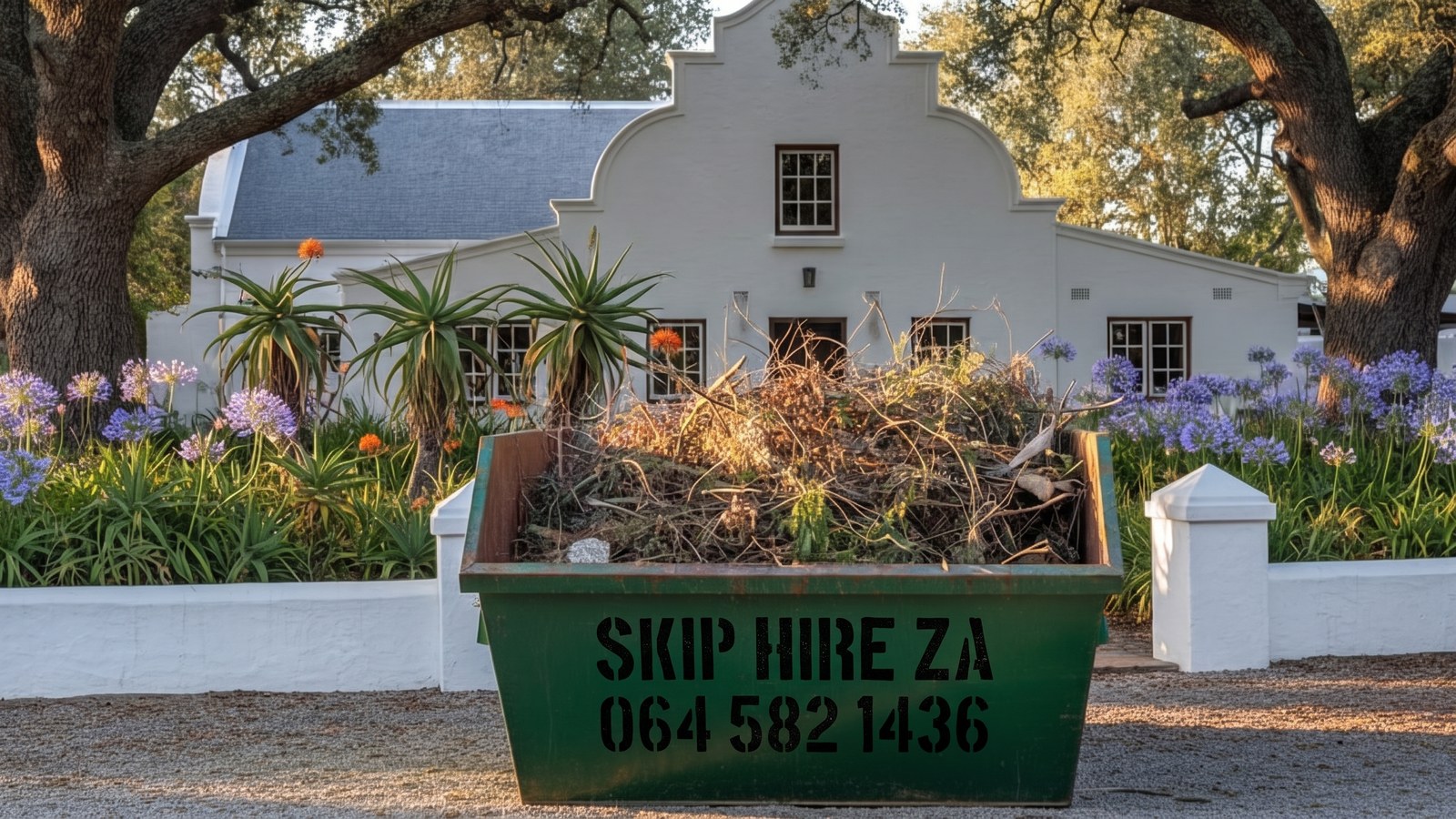
Step 1: Collection and Transport to Licensed Facility
After collection from your property, all skips are transported to a licensed waste management facility in the Western Cape. Landfills operate under waste management licences issued under the National Environmental Management: Waste Act (NEMWA, Act 59 of 2008).
Step 2: What Happens to Each Material
City landfills bury the general waste that can’t be reused or recycled. Recycling happens at drop-offs and material recovery facilities, which only take sorted loads, so what you keep separate decides where it ends up:
- Clean concrete and brick rubble → at the City’s landfills, clean rubble is typically stockpiled for temporary haul roads and for covering waste. It is also the cheapest stream to tip: R36 a tonne against R872.10 for general waste (City tariffs 2026/27)
- Ferrous and non-ferrous metals (steel, aluminium, copper) → recovered for scrap metal recycling. Cape Town has active scrap metal markets with numerous licensed collectors
- Green and garden waste → clean garden waste is chipped: the City’s waste plan records 117,074 tonnes chipped at City sites in 2023/24
- Cardboard and paper → separated and baled for paper recycling
- Plastics → sorted by polymer type where economically viable; contaminated or mixed plastics typically go to landfill
Step 3: Residual Waste to Licensed Landfill
Material that cannot be economically recycled, contaminated mixed waste, non-recoverable plastics, composite materials, goes to a licensed Western Cape landfill facility. Cape Town’s primary landfills include Vissershok (Northern Suburbs) and Coastal Park (Southern Suburbs), both operated under strict environmental licences.
The City of Cape Town runs two operational landfills that take this residual waste: Coastal Park Landfill on Baden Powell Drive in Muizenberg, and Vissershok Landfill off the N7 near Table View. Both pages list the current gate hours, note that the landfill and the drop-off facility on each site close at different times.
The full directory of City facilities, every drop-off with its address and current hours, is on our Cape Town dump sites page.
What You Can Do to Maximise Recycling
The more separated your waste is, the higher the recycling rate. Practical steps:
- Load concrete and heavy rubble in a separate skip (or area of the skip) from light materials
- Keep garden waste as a pure green load where possible, green waste composting rates are much higher than mixed loads
- Remove obvious recyclables (cardboard, metal) before loading the skip if convenient
- Do not put prohibited hazardous items in the skip: they contaminate recoverable material
NEMWA Compliance
South Africa’s National Environmental Management: Waste Act (NEMWA) sets minimum standards for waste management, including requirements for licensed transport, licensed disposal facilities, and waste characterisation. Skip Hire ZA’s operations comply with NEMWA requirements, all waste is transported by registered waste handlers to permitted facilities.
Book with Skip Hire ZA, responsible waste disposal, transparently handled.
📞 064 582 1436 Get a Quote →What can go in a skip? → | Skip hire Cape Town →
Related Skip Hire Services in Cape Town
- Rubble removal Cape Town, concrete, tiles, building debris
- Garden waste removal Cape Town, same-day green waste skip hire
- Mini skip hire (2m³ & 3m³): 2m³ & 3m³ from R850
- Skip hire prices Cape Town 2026, full cost guide
- skip hire Cape Town: 40+ suburbs covered